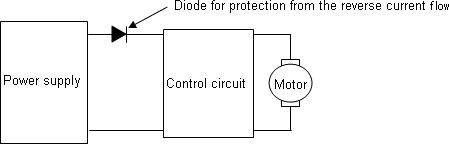
When a motor is used as the load, a large inrush current-typically several times the rated current-occurs at startup. Furthermore, when the motor is turned off, a back electromotive force (E = −L × di/dt) is generated due to the collapsing magnetic field.
1. Peak current during motor startup
When a motor starts, the peak current can reach several times its rated value. If this peak current exceeds the rated current of the power supply, the output voltage may drop due to activation of the overcurrent protection. As a result, the voltage applied to the motor decreases, preventing it from producing its maximum torque. If maximum starting torque is required, the power supply should have a rated current higher than the motor’s peak starting current.
2. Back electromotive force when the motor stopped
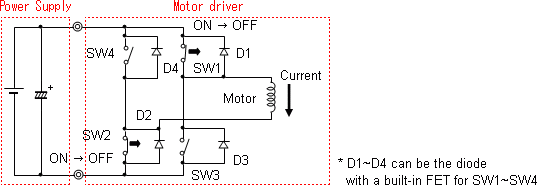
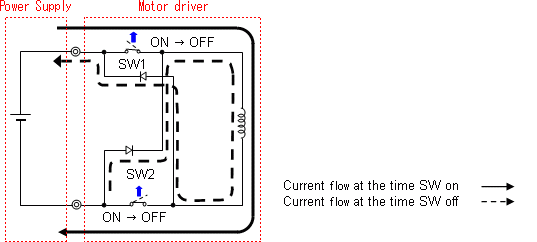
In circuits designed for polarity reversal, reverse current may flow due to the back electromotive force generated when the motor stops. This can also cause the output voltage of the power supply to drop (see Figures. 2.1 and 2.2).
For the same reason, the output voltage of the power supply may rise and activate the overvoltage protection, causing the unit to shut down. Therefore, when using a motor, inductor, or other inductive load, a protection diode must be installed to prevent reverse current flow and avoid an increase in the power supply’s output voltage.