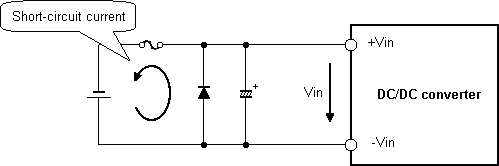
Operating Principles & Precautions

Protection Circuits

How to Protect a DC-DC Converter from Reverse Voltage

Avoid applying reverse-polarity input voltage, as it can damage the power supply.
The unit can be protected from reverse input voltage by adding an external diode, as shown below.
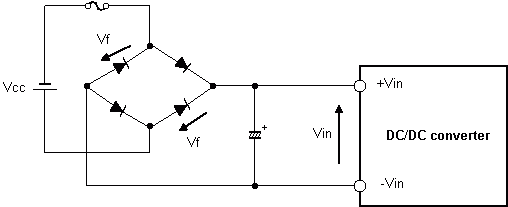
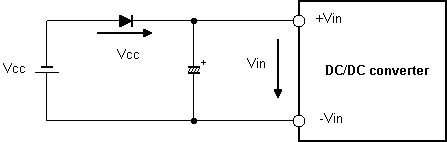
Fig. 1.1 Example of reverse input voltage protection circuit Version 1
Fig. 1.2 Example of reverse input voltage protection circuit Version 2
Fig. 1.3 Example of reverse input voltage protection circuit Version 3

Table 1.1 Feature of reverse input voltage protection circuit

  Fig.# Operation during applied reverse polarity voltage Advantage Disadvantage Cost
1 1.1 Normal operation
  • Normal output
  • No recovery components required
  • Reverse connection not detectable
  • Constant diode power loss
High
2 1.2 No output
  • Detectable of reverse connection
  • No recovery components required
  • Reverse connection detectable
  • Constant diode power loss
Low
3 1.3 No output
Fuse open
  • Reverse connection detectable
  • No diode power loss
  • Fuse replacement required for recovery
  • Overcurrent for an instant
Medium
Return to Technical Information List

Other Content