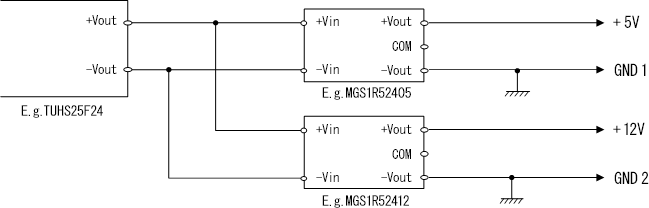
1. Input Voltage for DC/DC converter
(1) When using AC/DC power supply
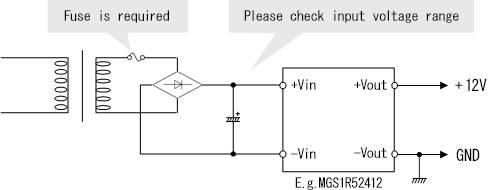
(2) When using AC voltage source
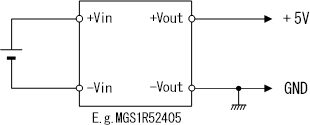
(3) When using a Battery-operated Device
2. Using DC/DC converter
(1) When a Floating Mechanism is Required for Output Circuit
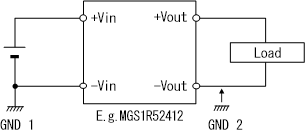
(2) To draw a Reverse Polarity Output
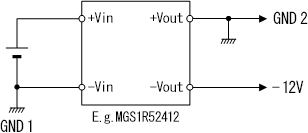
(3) To provide a negative voltage to -Vin by using +Vin side of the converter as GND potential (0V)
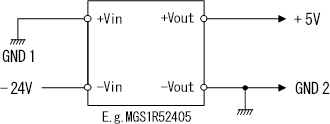
(4) To obtain the sum of the input voltage and positive output voltage
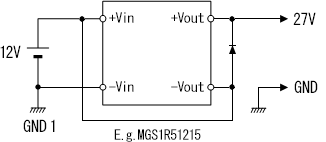
- The output current must be lower than the rated current.
- Total Output voltage regulation is sum of input voltage regulation and output voltage regulation.
- If the output voltage is shorted, a large current may flow depending on the input voltage source.
3. Using Dual Output Type
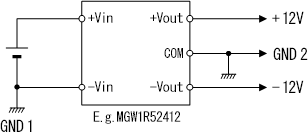
(1) Using dual output type
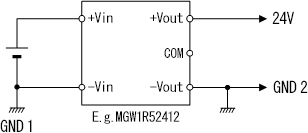
(2) Using +/-12V as 24V output
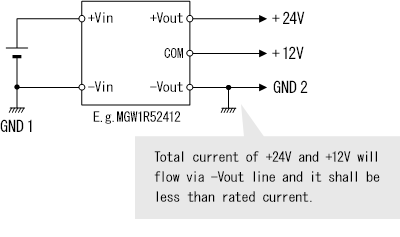
(3) Using ±12 V as multiple outputs: +12 V and +24 V
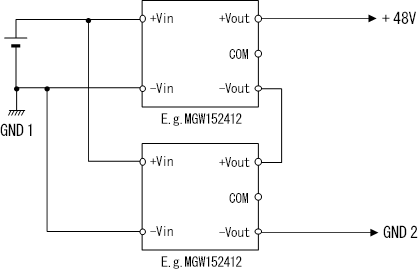
(4) Using as 48V output