
-
In large terminal blocks, high‑torque tightening is required. While temporary fastening with a Phillips screwdriver is simple, the final tightening process poses a high risk of cam‑out—where the cross recess is damaged—or wear on the tool tip. As a result, the work has traditionally depended on skilled operators.
Is there a way to make screw‑tightening operations easier? -
To improve workability without the need for special tools and to prevent cam‑out of the screw head, we propose the S option, which replaces standard screws with hex socket head cap screws. Using a hex wrench enables reliable and safe tightening.

Cause
Cause (Mechanism) of Phillips Screw Head Cam‑Out and Damage
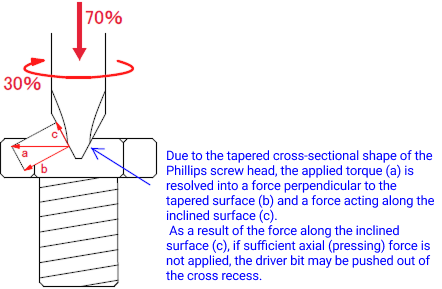
Phillips screws feature a self‑alignment structure that guides the driver bit to the center. However, because the recess has tapered walls and shallower grooves toward the outside, insufficient downward force causes the bit to lift and results in cam‑out (Fig. 1).
Cam‑out occurs easily when the recommended force balance—70% downward force / 30% rotational force—is not maintained.
Even slight angling between the screwdriver and the screw head increases the likelihood of the bit lifting.
Larger screw diameters require greater torque, making cam‑out more likely.
The Challenge of Training Skilled Workers
Many manufacturing sites have internal certification programs for screw‑tightening operations. However, the aging of skilled workers and the need for skill transfer continue to be significant issues.
Solution
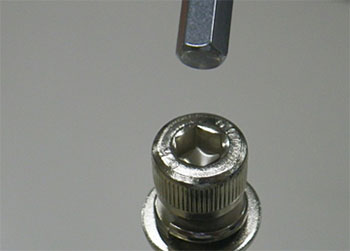
Hex Socket Head Bolts Prevent Screw Head Damage
No upward force is generated that would cause the tool to slip out.
The six‑surface contact provides stable torque transmission.
They are highly suitable for high‑torque tightening.
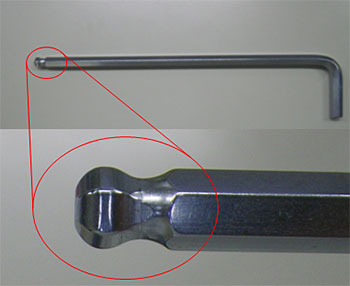
Improved Workability and Reduced Operator Dependency
The long arm of a hex wrench typically has a ball‑point end, allowing work at angles up to approximately 30 degrees without keeping the tool perfectly vertical.
Fast turning is easy, contributing to reduced labor time.
Final tightening with the long arm allows even non‑skilled workers to apply sufficient torque safely and consistently.
The S Option (hex socket head cap screws) is available for the following series.
-
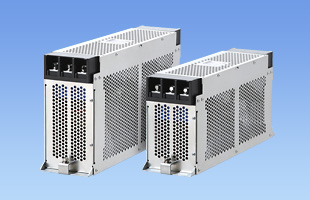
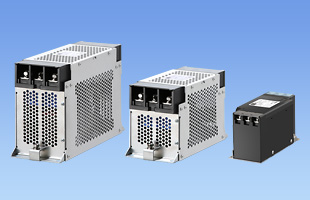
FTB series

Three-phase 500VAC 80-150A
Book type
High-attenuation from 150kHz to 1MHz
2-stage filter -
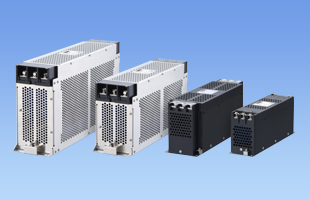
FTA series
Three-phase 500VAC 40-150A
General-purpose Book type
High-attenuation from 150kHz to 1MHz
1-stage filter -
FSB series
Three-phase 500VAC 10-150A
Book type
EMI/EMC Filter for motor drive system
2-stage filter